Introduction
Syria is a country in the Levant, on the eastern shore of the Mediterranean Sea, at the meeting point of Europe, Asia, and Africa. Officially the Syrian Arab Republic, it covers about 185,180 square kilometres and is home to roughly 26 million people. Its capital, Damascus, is considered one of the oldest continuously inhabited cities in the world, and the country as a whole is often described as part of the "cradle of civilization," a region where some of humanity's earliest cities, alphabets, and legal codes took shape.
This overview looks at Syria's geography, its long and layered history, its major cities and ancient landmarks, its people and languages, and the culture, arts, and cuisine that have grown out of thousands of years of exchange along the trade routes that once crossed the country.
Geography
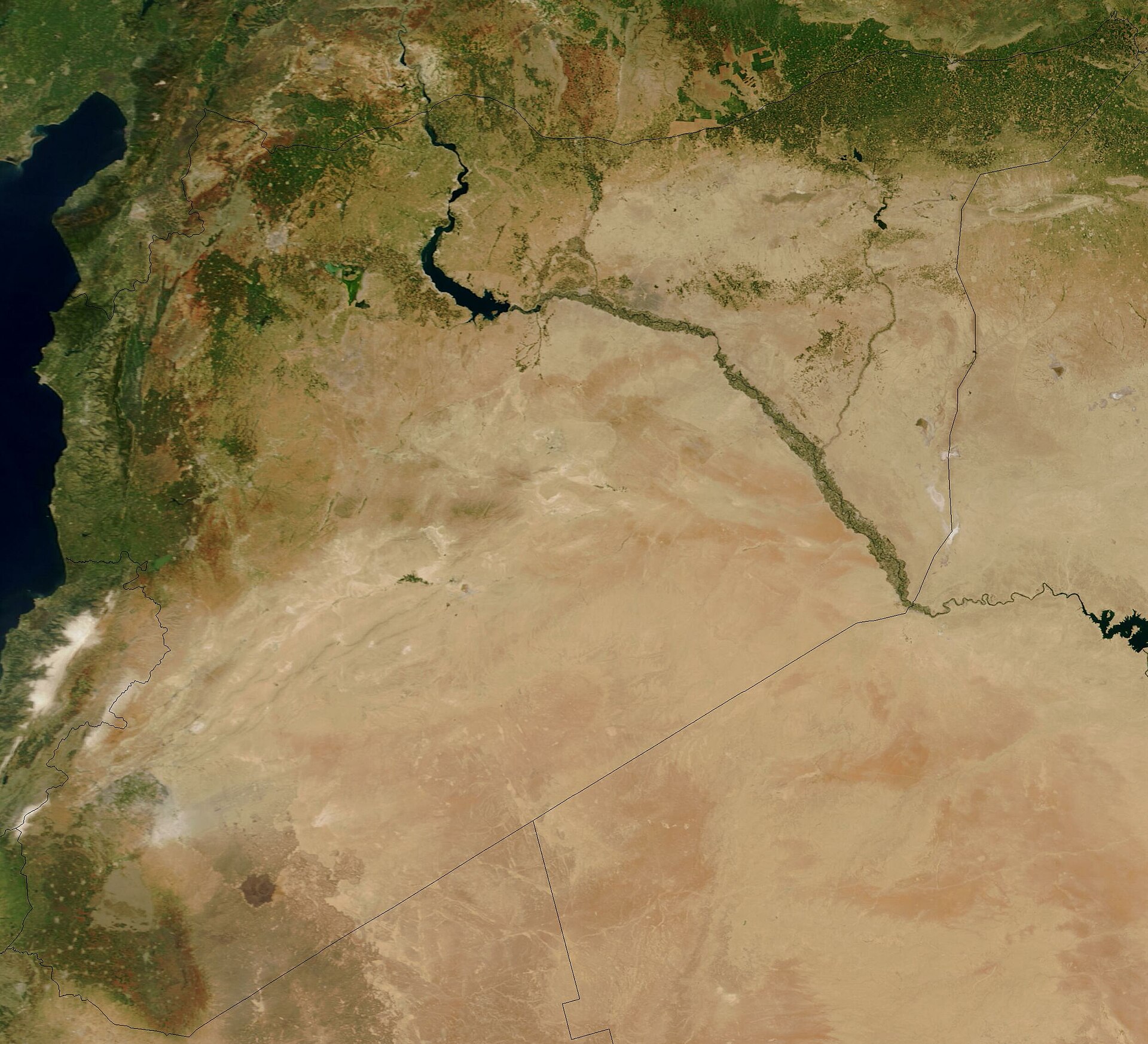
Syria borders Turkey to the north, Iraq to the east and southeast, Jordan to the south, and Lebanon and Israel to the southwest, with a coastline on the Mediterranean Sea to the west. The country's terrain is remarkably varied for its size: narrow, fertile coastal plains give way to the western mountain ranges, which in turn descend into the broad central and eastern plateaus that make up the Syrian Desert, known locally as the Badiya.
The highest point in the country is Mount Hermon, rising to 2,814 metres near the border with Lebanon. Syria's most important river is the Euphrates, which crosses the northeast of the country and has sustained agriculture and settlement there since ancient times; the Orontes and Khabur rivers are also significant. The climate ranges from a humid Mediterranean regime along the coast, through semi-arid steppe in the interior, to true desert conditions in the east and south, with the fertile northwest standing in sharp contrast to the arid plateau that covers most of the country's land area.
History
Key dates
- 11th millennium BCFirst settlers
The Natufian culture, among the first people to settle permanently, lives in the region.
- c. 3500 BCEbla
The kingdom of Ebla, near modern Idlib, grows into one of the earliest recorded civilizations.
- 14th century BCUgarit
The coastal city of Ugarit gives the world one of its first alphabets.
- Early centuries ADRoman Palmyra
Under Roman rule, Palmyra flourishes as a caravan hub linking the Mediterranean to Persia and the Silk Road.
- 7th to 8th centuryUmayyad Damascus
Damascus becomes the seat of the Umayyad Caliphate and gains one of the world's grandest early mosques.
- 1098 to 1189Crusader states
Crusader states hold parts of the coast and interior, building fortresses such as Krak des Chevaliers.
- 1516Ottoman rule
The region passes to the Ottoman Empire, and Damascus becomes a staging point for pilgrims travelling to Mecca.
- 1920Kingdom, then mandate
Syria briefly becomes an independent Arab kingdom under Faisal I before coming under French mandate.
- 1946Independence
Full independence is achieved, and Syria becomes a founding member of the United Nations.
03.1Ancient Civilizations
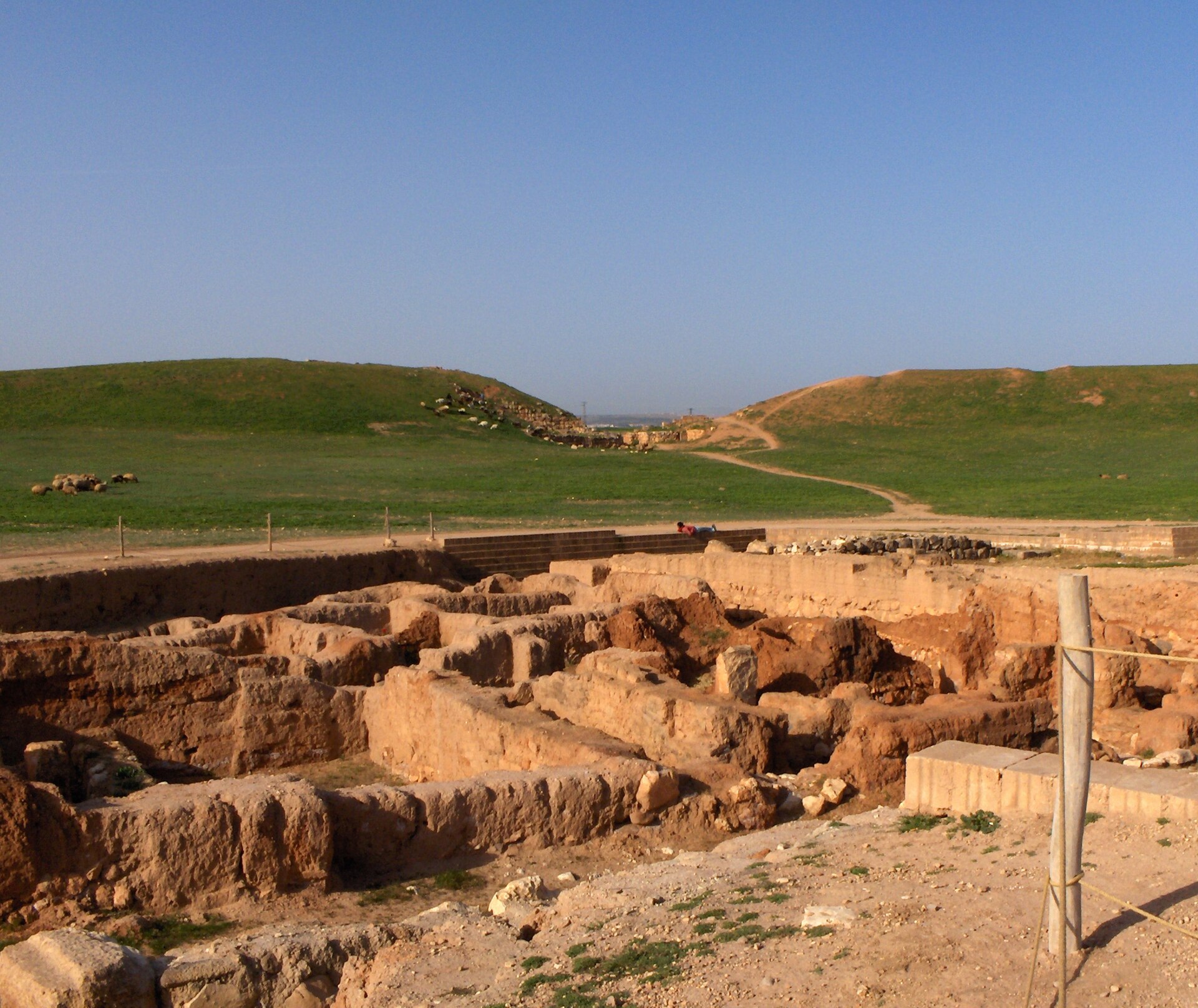
Syria's history stretches back further than almost anywhere else on Earth. The Natufian culture, among the first people to settle permanently rather than move with the seasons, lived in the region as early as the 11th millennium BC. Millennia later, the kingdom of Ebla, founded around 3500 BC near modern Idlib, grew into one of the earliest recorded civilizations, trading and corresponding with Egypt and Mesopotamia as an equal. Other early centers such as Ugarit, on the coast, gave the world one of its first alphabets in the 14th century BC.
03.2Empires and Crossroads
Over the following centuries, Syria's position at the crossroads of three continents made it a prize for successive empires: Hittites, Egyptians, Assyrians, and Babylonians, followed by the Persians, the Seleucids after Alexander the Great, and eventually Rome. Under Roman rule the desert city of Palmyra flourished as a wealthy caravan hub linking the Mediterranean world to Persia and the Silk Road beyond.
Damascus rose to particular prominence after the early Islamic conquests, becoming the seat of the Umayyad Caliphate in the 7th and 8th centuries, a period that left the city with one of the world's grandest early mosques. Crusader states held parts of the Syrian coast and interior between 1098 and 1189, leaving behind fortresses such as Krak des Chevaliers, before the region passed to the Mamluks and then, from 1516, to the Ottoman Empire, under which Damascus became an important staging point for pilgrims travelling to Mecca.
03.3The Modern State
Ottoman rule ended after the First World War, and Syria briefly became an independent Arab kingdom under Faisal I in 1920 before coming under French mandate. Full independence was achieved in 1946, and Syria became a founding member of the United Nations. In the decades since, the country has continued to be shaped by its role as a meeting point of cultures, a legacy visible today in its cities, languages, and cuisine.
Damascus, the Capital
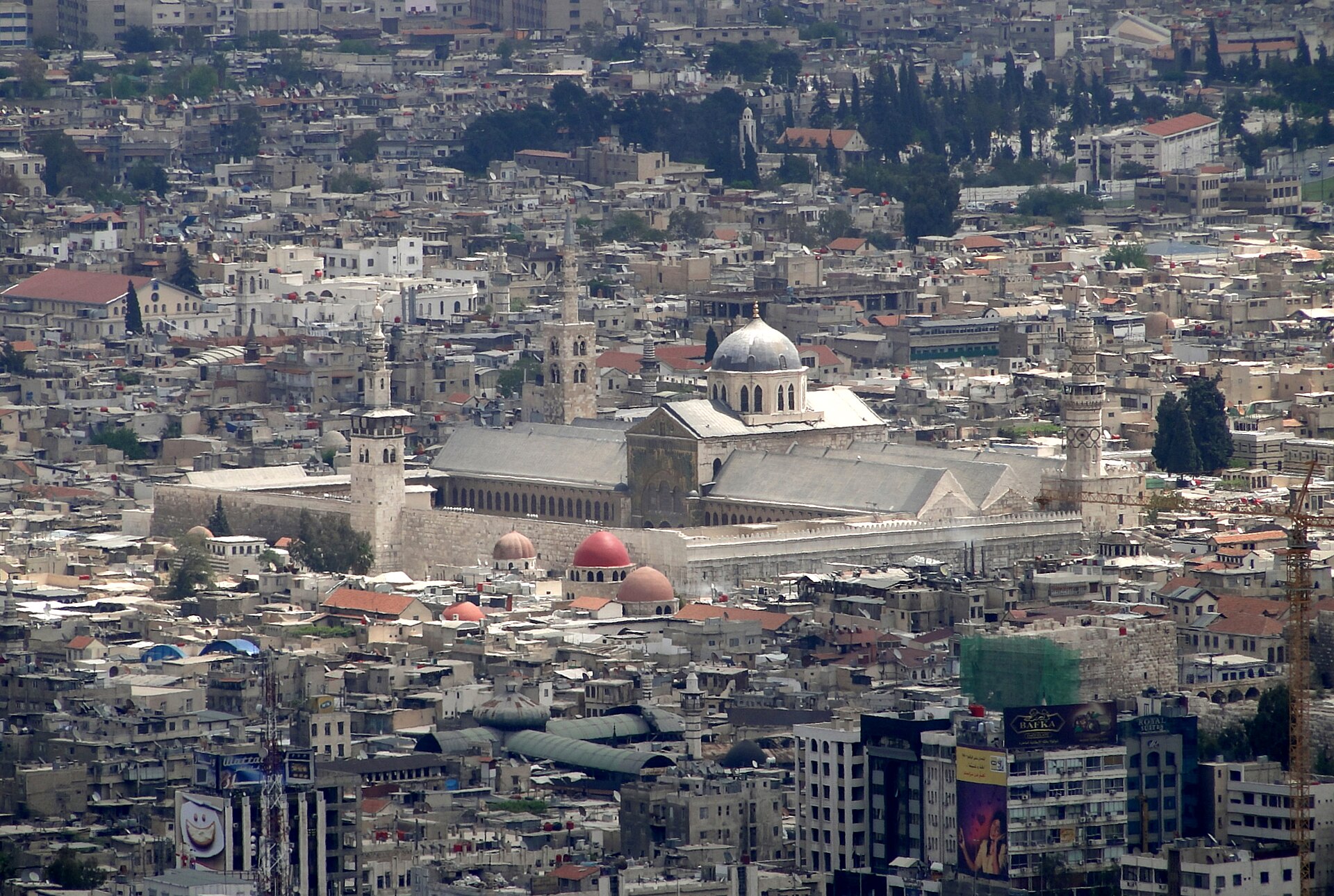
Damascus sits in a fertile basin at the foot of Mount Qasioun, watered by the Barada River, and is widely regarded as one of the oldest continuously inhabited cities on Earth, with settlement dating back to at least the third millennium BC. Its Old City, a UNESCO World Heritage Site since 1979, is a dense maze of narrow lanes, courtyard houses, and covered markets that has been inhabited without interruption for thousands of years.
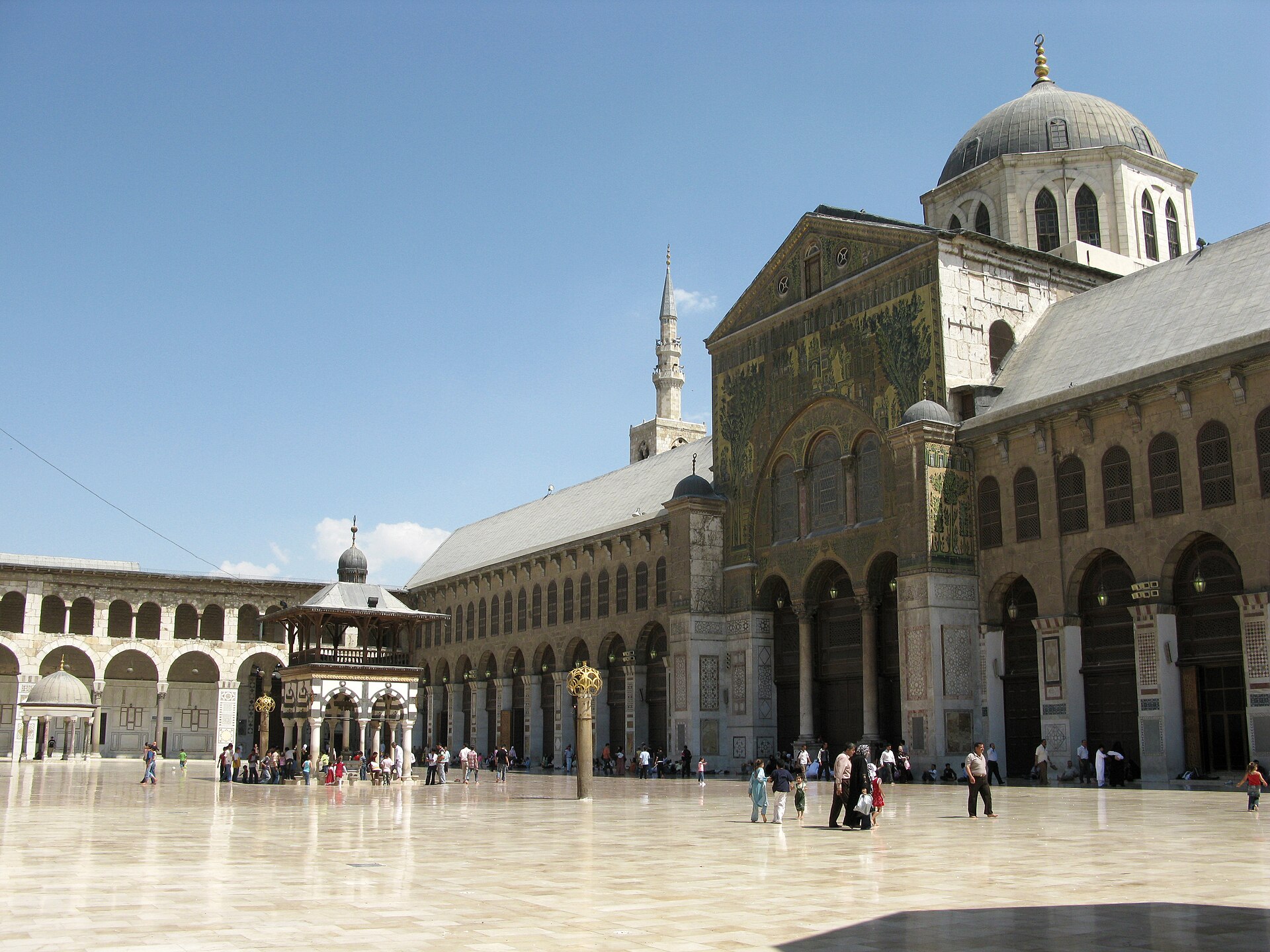
At its heart stands the Umayyad Mosque, also known as the Great Mosque of Damascus, one of the largest and oldest mosques in the world. Built in the early 8th century on a site that had earlier held a Roman temple and then a Byzantine church, it remains a major center of worship and pilgrimage, and its courtyard and mosaics are counted among the finest surviving examples of early Islamic architecture.
Aleppo
Aleppo, in northern Syria, is one of the country's largest cities and, like Damascus, has been continuously inhabited for thousands of years. Its strategic position on trade routes linking Mesopotamia, Anatolia, and the Mediterranean made it a major commercial center for most of its history, drawing merchants and goods from as far afield as China and India.
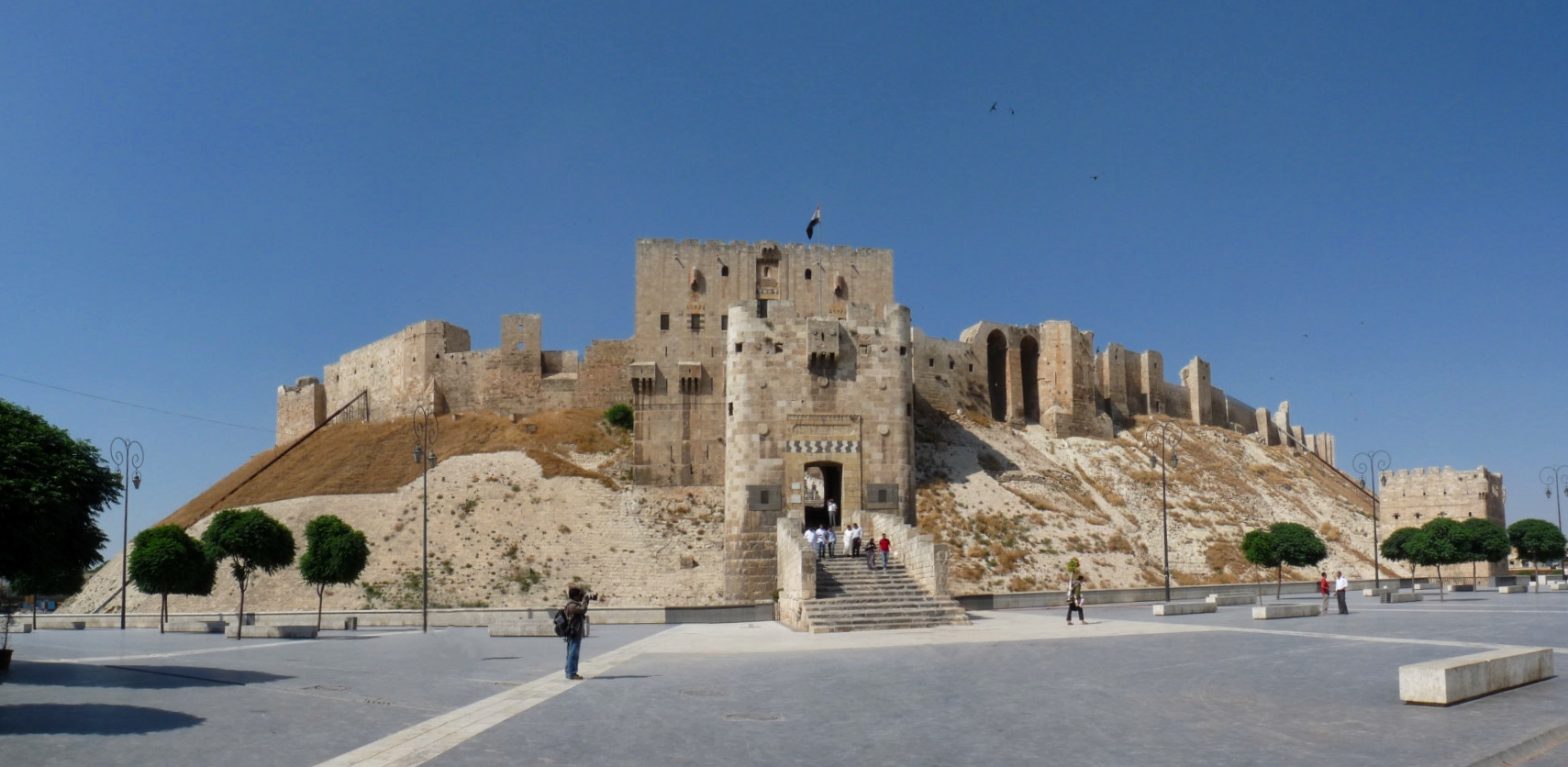
Towering over the old city is the Citadel of Aleppo, a large fortified palace whose hilltop site has been used defensively since at least the middle of the third millennium BC. The citadel as it largely stands today took shape under the Ayyubids in the 13th century and is considered one of the oldest and largest castles in the world, having been held in turn by Arameans, Assyrians, Greeks, Romans, Byzantines, and Mamluks before the Ottomans.
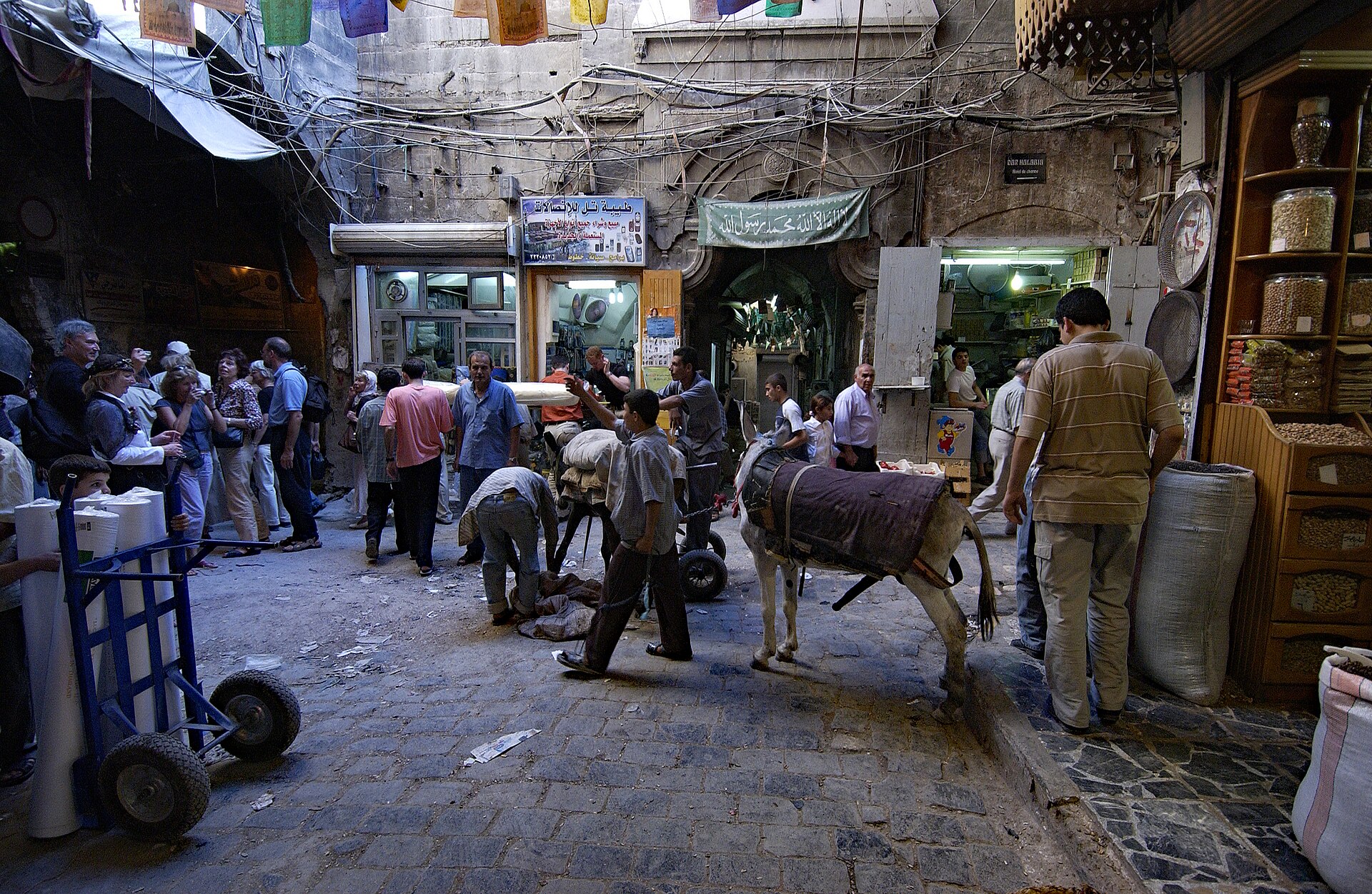
Beneath the citadel spreads Al-Madina Souq, the largest covered historic market in the world, stretching some 13 kilometres through vaulted stone alleyways. For centuries it has been a center for silk from Iran, spices and dyes from India, and locally produced wool, soap, and agricultural goods, with individual souqs and khans (caravanserais) dating back to the 14th century and named for the crafts and guilds once based there.
Palmyra
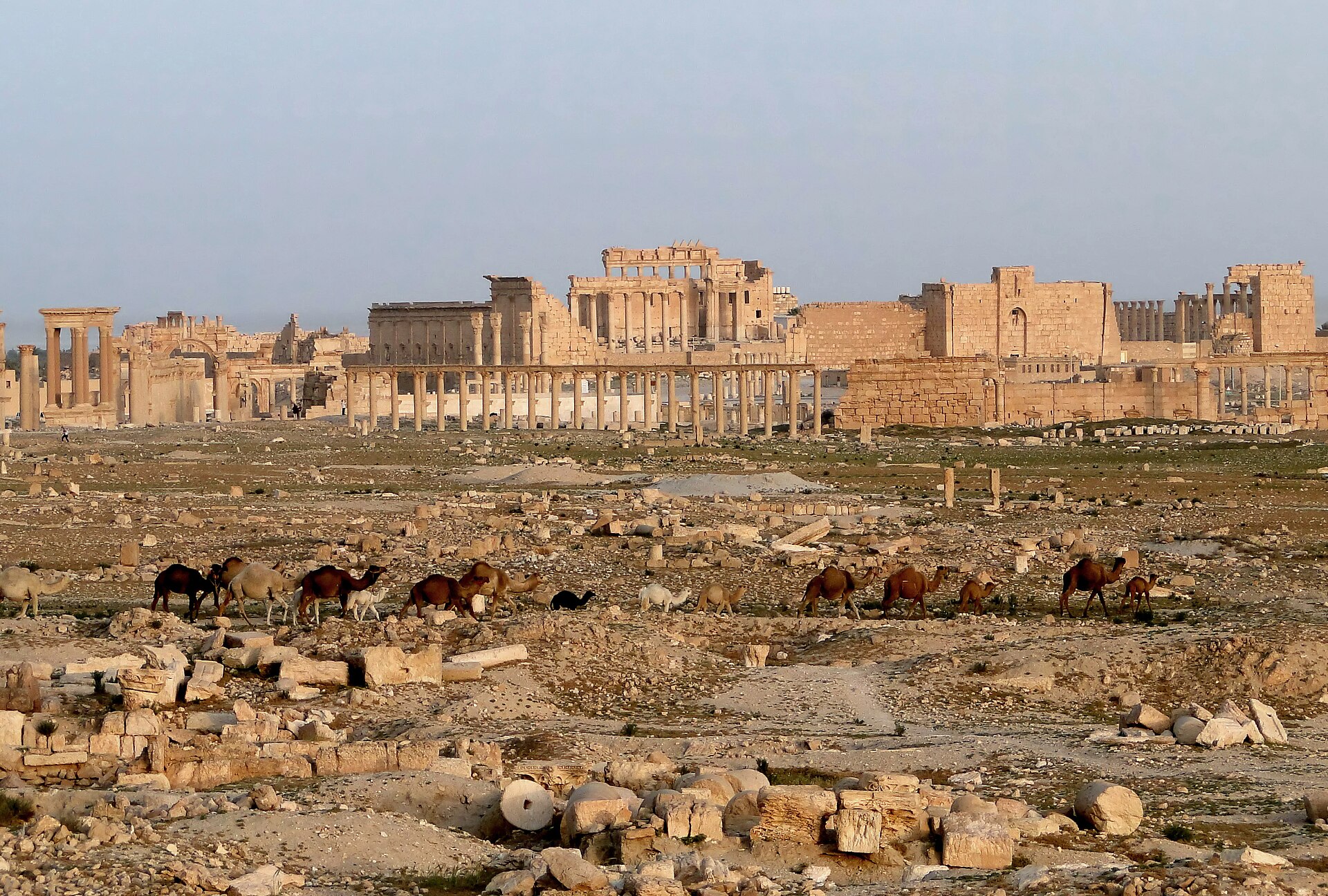
Rising from an oasis in the middle of the Syrian Desert, Palmyra was one of the ancient world's great caravan cities. Archaeological finds at the site date back to the Neolithic period, and by the early centuries AD, under Roman rule, Palmyra had grown wealthy as a hub of the trade routes connecting the Mediterranean, Persia, and the Silk Road.
That wealth funded an extraordinary series of monuments: the Great Colonnade, the Temple of Bel, and distinctive tower tombs that combined Greco-Roman architectural forms with local Aramaic and Arab artistic traditions. The Palmyrenes themselves were a cosmopolitan mix of Amorite, Aramean, and Arab heritage, and their language, Palmyrene Aramaic, appears alongside Greek in inscriptions across the site. The Site of Palmyra was inscribed as a UNESCO World Heritage Site in 1980.
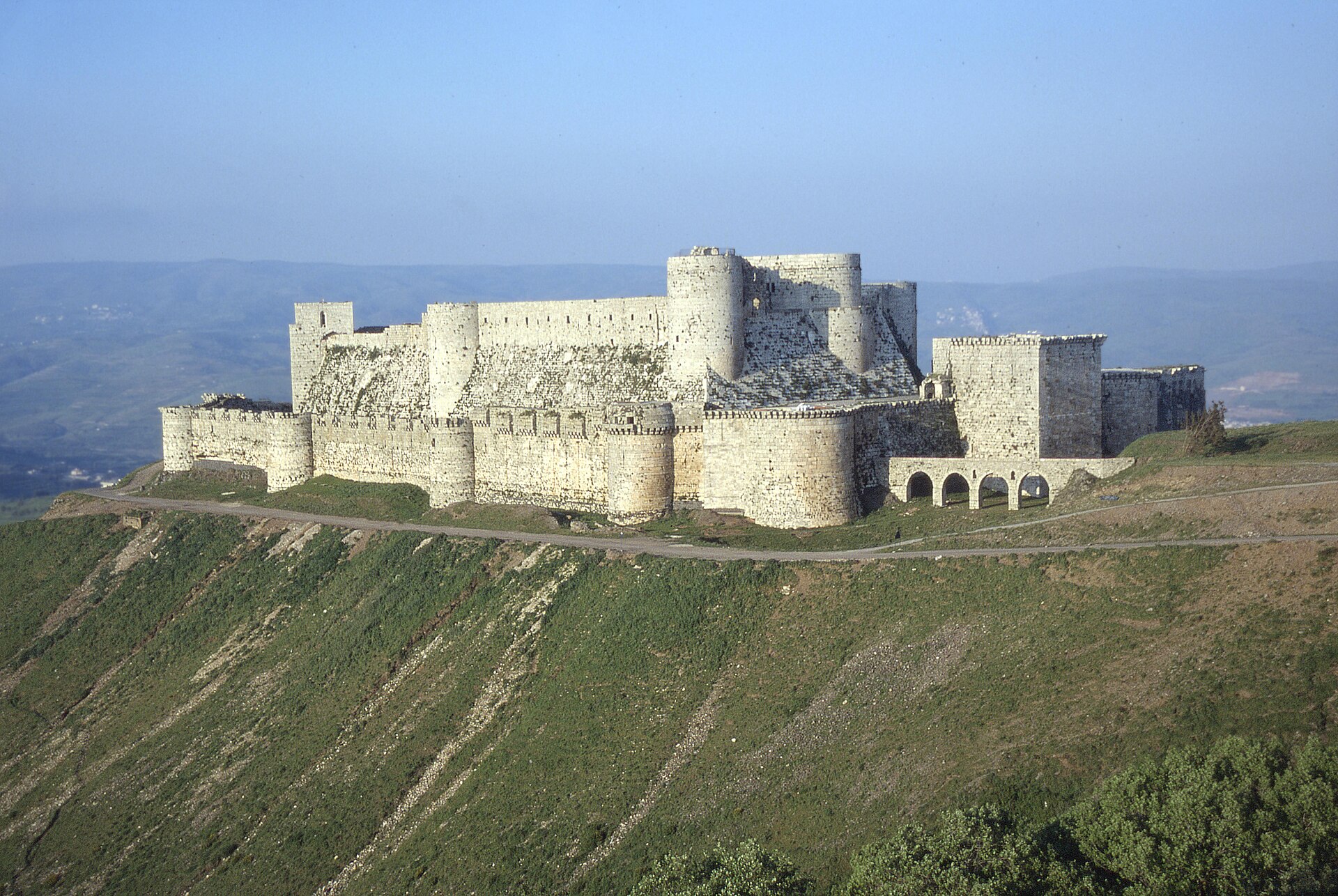
Krak des Chevaliers
West of Homs, on a hilltop overlooking the plain below, stands Krak des Chevaliers, widely regarded as one of the best-preserved medieval castles anywhere in the world. The site was first fortified in the 11th century, but the castle as it survives today was built and expanded by the Knights Hospitaller after 1142, when it was granted to the order by Raymond II, Count of Tripoli.
At its height, Krak des Chevaliers housed a garrison of around 2,000 and served as both a military stronghold and an administrative center for the Crusader states along the border of the County of Tripoli. Its concentric design, with an outer wall encircling a fortified inner ward, made it one of the most formidable castles of its age. Together with the nearby Qal'at Salah El-Din, it was inscribed as a UNESCO World Heritage Site in 2006.
World Heritage Sites
Syria's long and layered history has left it with six UNESCO World Heritage Sites, reflecting civilizations from the ancient world through the medieval period.
- 1979Ancient City of Damascus
One of the oldest continuously inhabited cities in the world, settled since at least the 3rd millennium BC.
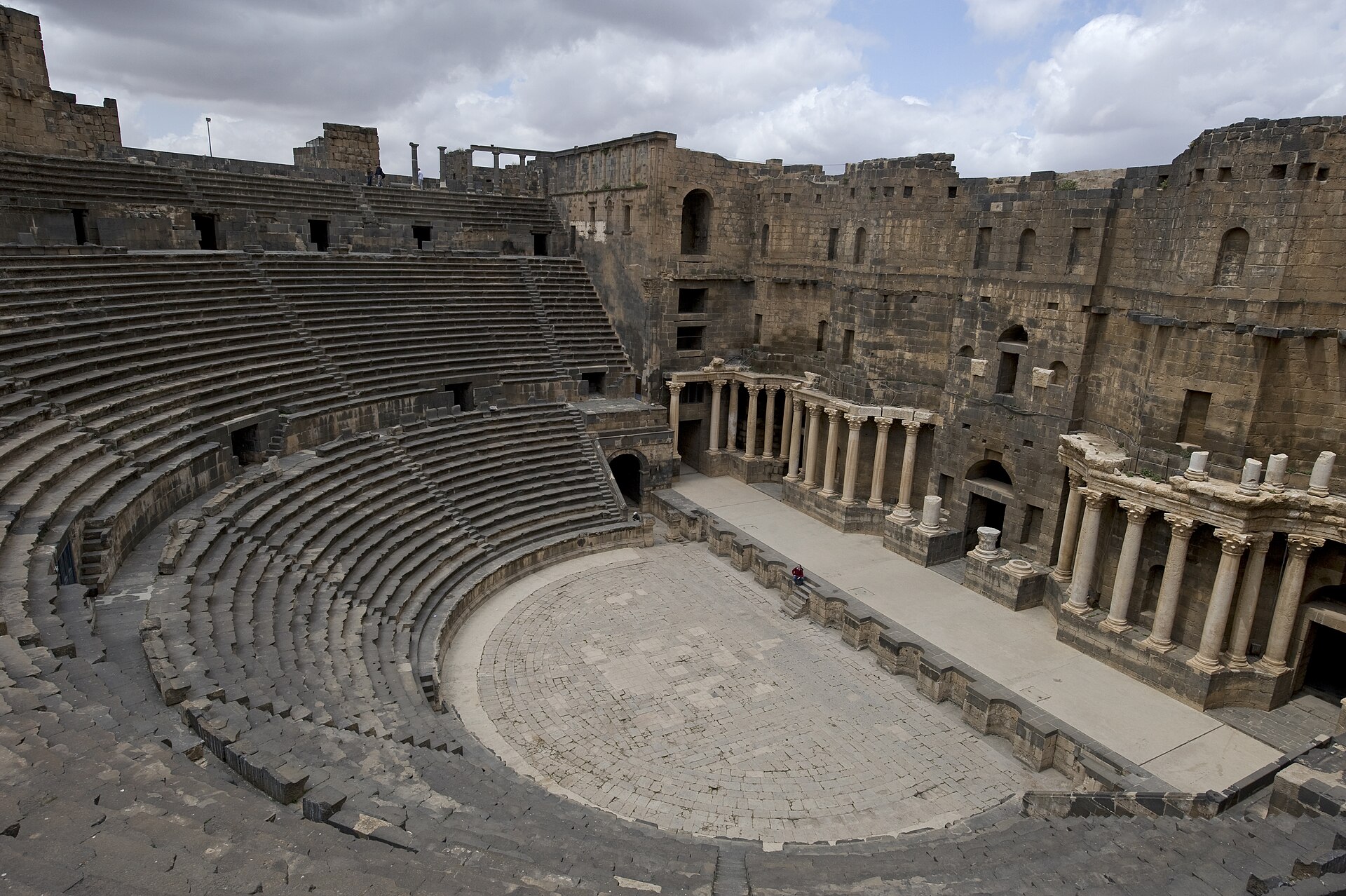
- 1980Ancient City of Bosra
A former Nabataean settlement conquered by Rome in the 2nd century AD, with a well-preserved Roman theatre.
- 1980Site of Palmyra
The ruins of a wealthy caravan city that flourished under Roman rule.
- 1986Ancient City of Aleppo
A historic trading hub shaped by Hittite, Roman, Umayyad, Mamluk and Ottoman rule.
- 2006Crac des Chevaliers and Qal'at Salah El-Din
Two of the finest surviving examples of Crusader-era military architecture.
- 2011Ancient Villages of Northern Syria
Around 40 villages dating from the 1st to 7th centuries, offering a rare window into rural Byzantine and Late Antique life.
People, Languages, and Religion
Syria's population of roughly 26 million is predominantly Arab, making up an estimated 80 to 90 percent of the population, with Kurds forming the largest minority at around 9 to 10 percent, alongside smaller communities of Assyrians, Armenians, Turkmen, Circassians, and others. Arabic is the official language, and Kurdish is also officially recognized; in addition to these, Neo-Aramaic, Turkish, Syriac, Circassian, Chechen, Armenian, Greek, and Domari are all spoken by various communities, a linguistic diversity that reflects Syria's long history as a crossroads.
Islam is the majority religion, practiced by the great majority of Syrians, most of them Sunni, alongside Alawite and other Shia communities. Christianity has deep roots in the country: the Apostle Paul is traditionally said to have converted on the road to Damascus, and Syria remains home to a range of Christian denominations, along with smaller religious communities, all contributing to a social fabric shaped by centuries of coexistence.
Culture, Arts, and Traditions
Syrian culture draws on layers of history stretching from the Phoenicians and Arameans through the Islamic Golden Age to the present day. Music has long been centered on Damascus, home to institutions of classical Arab music, alongside a rich folk tradition built around instruments such as the oud, the ney, and hand drums; well-known Syrian musicians include Asmahan, Farid al-Atrash, and Sabah Fakhri. Literature has a similarly deep tradition, with poets such as Nizar Qabbani among the most celebrated voices in the modern Arabic-language canon.
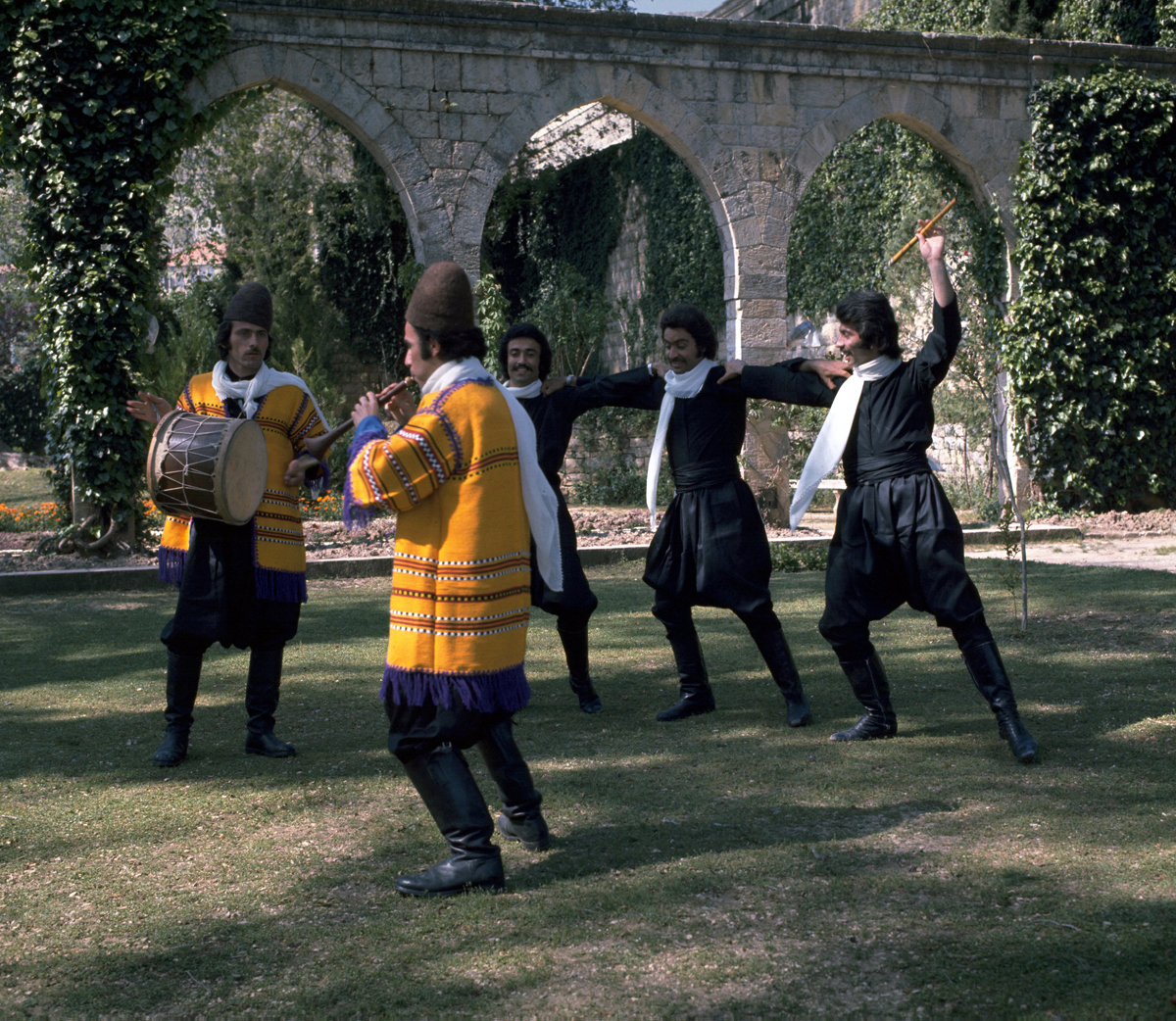
Dance and festivity are closely linked in Syrian life. The dabke, a circle and line dance found across the Levant, is performed at weddings and celebrations throughout the country, with dancers linking arms or hands and stamping out rhythms led by a dancer at the head of the line. Traditional Syrian homes reflect a similar sense of community and hospitality, often built around a central courtyard with a fountain and citrus or grape trees, a domestic architecture exemplified by grand 18th-century buildings such as the Azm Palace in Damascus.
Cuisine
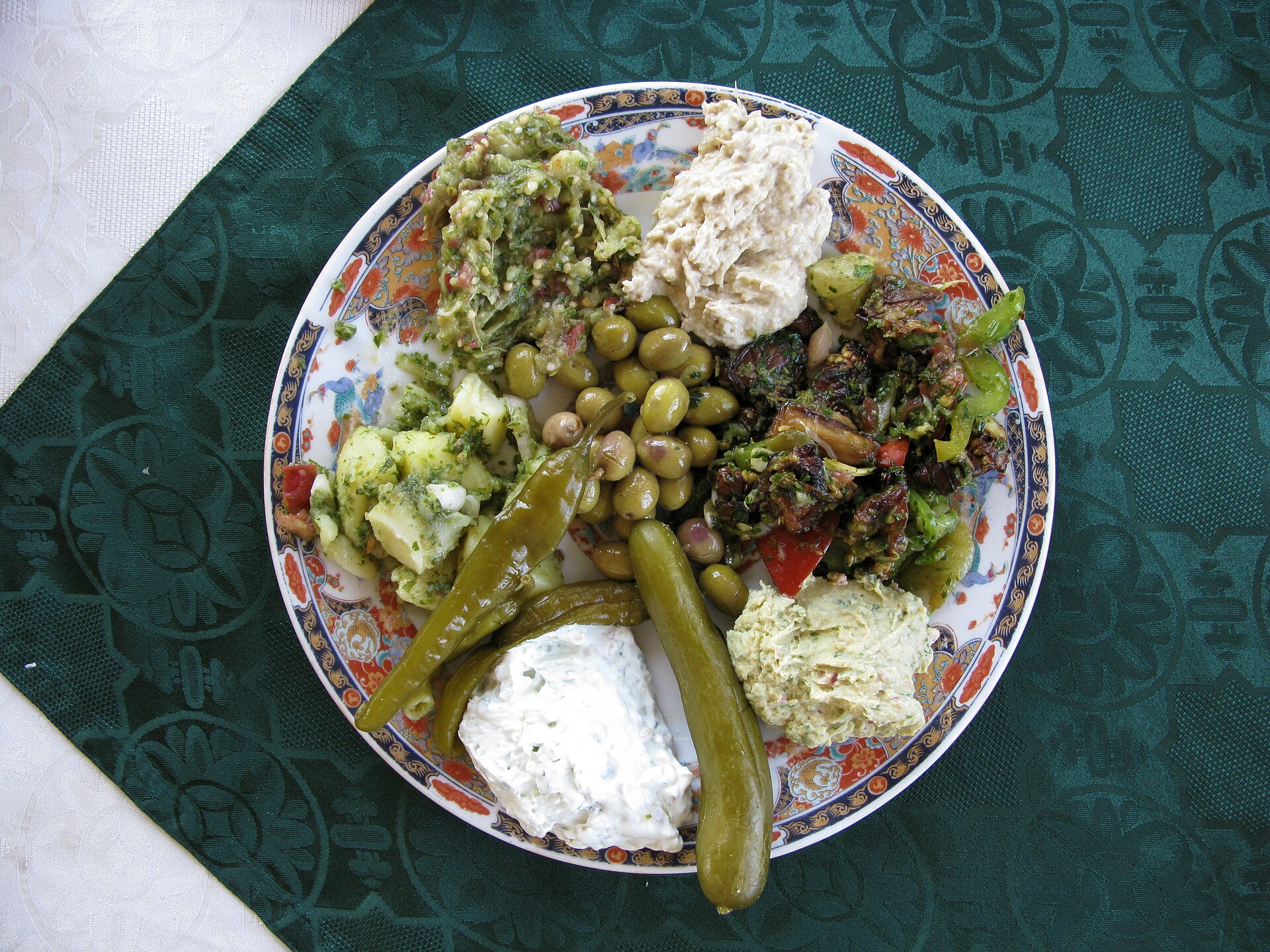
Syrian cuisine is part of the broader Arab and eastern Mediterranean culinary tradition, and many of its recipes are recorded as far back as the 13th century. Meals typically open with mezze, a selection of small appetizers such as hummus, baba ghanoush, tabbouleh, and stuffed grape leaves, served with flatbread, before moving on to main courses built around lamb, rice, and vegetables such as eggplant and zucchini, often flavored with olive oil, garlic, sesame, mint, and pistachios.
Kibbeh, made from bulgur wheat and minced meat, is considered something of a national dish and appears in dozens of regional variations. Other well-known dishes include shawarma, stuffed vegetables, and an array of kebabs, while meals traditionally close with sweets such as baklava and kanafeh, and a cup of cardamom-spiced Arabic coffee.
Economy and Natural Resources
Historically, Syria's economy has rested on a combination of agriculture, trade, and natural resources. The fertile northeast, particularly the Al-Jazira region, and the Hauran plain in the south have long been important centers of grain and cotton production, sustained by the Euphrates and its tributaries. Since the mid-20th century, petroleum and natural gas, first found in commercial quantities in the northeast in 1956, with major fields near Al-Hasakah and Deir ez-Zor, have been central to the economy, alongside other resources such as phosphate rock, asphalt, marble, and gypsum.
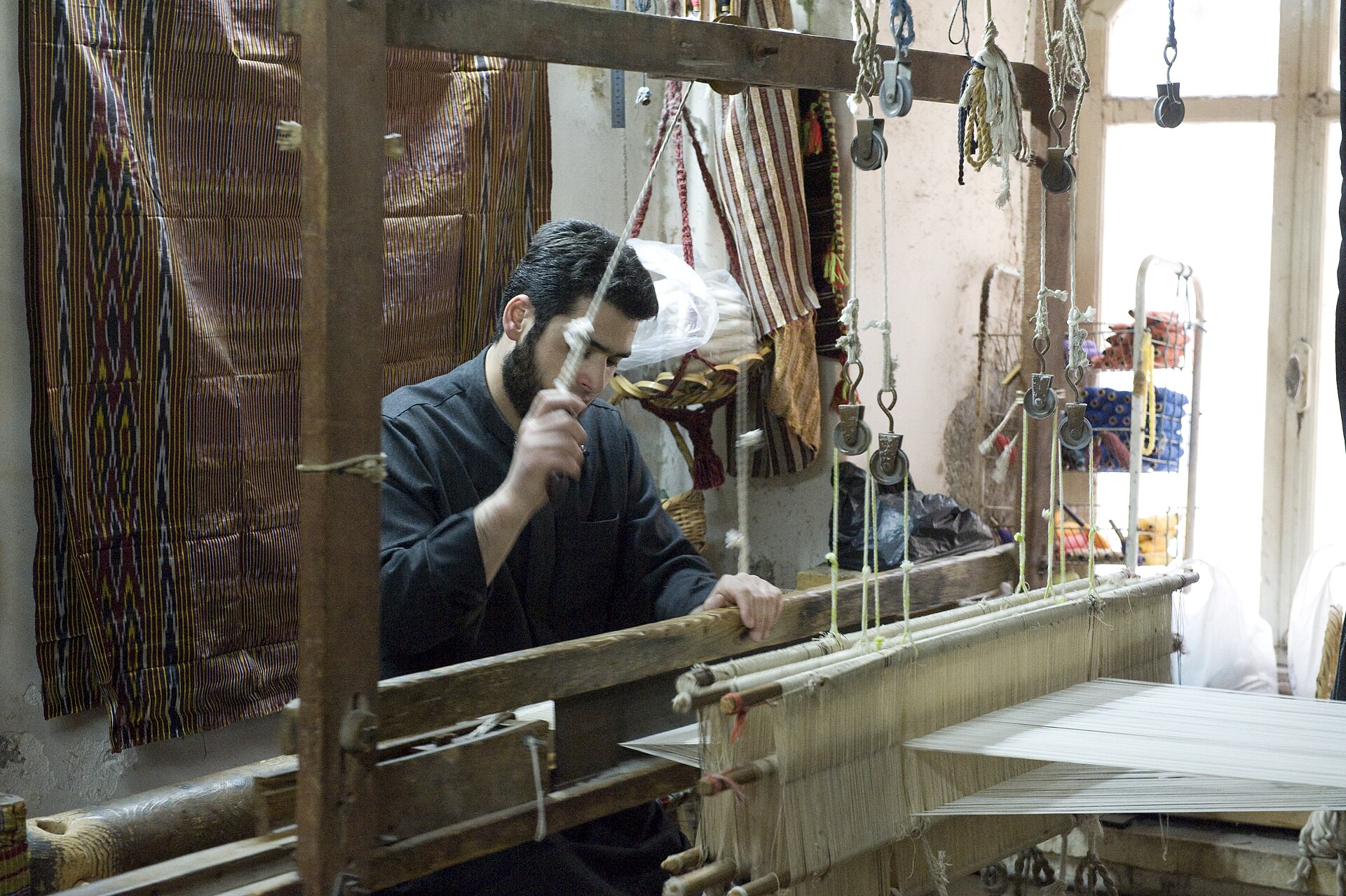
The country's position along historic trade routes also left it with a strong tradition of craftsmanship and small-scale manufacturing, from textiles and soap-making to the metalwork and inlaid woodwork long associated with the workshops of Damascus and Aleppo.
Conclusion
From the Bronze Age archives of Ebla to the covered markets of Aleppo and the colonnades of Palmyra, Syria's landscape is layered with the traces of civilizations that have met, traded, and built upon one another for thousands of years. Its geography, with coastal plain, mountain, river valley, and desert, has shaped a correspondingly varied culture, visible today in the languages spoken, the food served, and the music and dance performed at celebrations across the country. Taken together, these threads make Syria one of the richest and most historically significant regions in the world.